

Book Summary
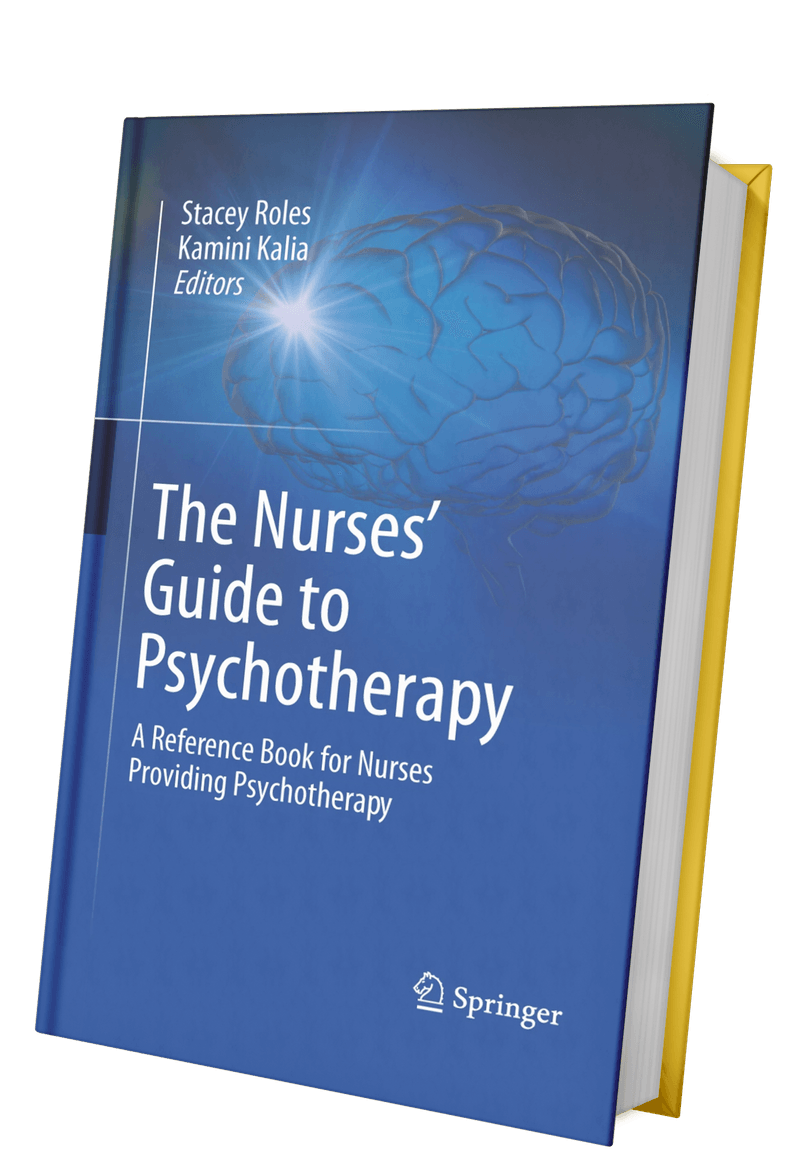
This book is a guide for nurses who plan to incorporate psychotherapy into their field of work. Mental illness continues to be on the rise with increases in anxiety disorders, suicidality, and depression among others.
This book will build upon the experiences of the nurse client relationship that has always been foundational to nursing and will discuss nurses clinical expertise and knowledge in relation to a holistic approach to care when implementing psychotherapy interventions.


Comprehensive Guide for Nurses
Stacey Roles, RN, MScN, PhD, and Kamini Kalia, RN, MScN, CPMHN(C), are proud to announce the release of their new book, The Nurses’ Guide to Psychotherapy: A Reference Book for Nurses Providing Psychotherapy, a significant contribution to the field of mental health nursing.
Authored by several established nurse psychotherapists, leaders, and other experts in their field, this reference is designed to support nurses, mental health practitioners, and healthcare providers in deepening their knowledge of psychotherapy, and enhancing their skills
in delivering holistic mental health care. The book provides clear guidance on how nurses can incorporate various psychotherapy techniques into their practice to better support patient outcomes. With detailed case studies and practical insights, this guide empowers nurses and clinicians to enhance their therapeutic relationships and address the complex emotional and psychological needs of their patients without relying solely on medication. By focusing on evidence-based psychotherapy approaches, the book fills a critical need in the mental health profession.
Stacey Roles, RN, MScN, PhD, a highly respected nurse psychotherapist, brings extensive clinical experience to this book. She has dedicated her career to integrating psychotherapy and psychopharmacology to provide better, more comprehensive care for her patients. She is also the clinical director of Roles & Associates Psychotherapy Services Inc. & the CBT Training Centre of the North, where she continues to advance mental health care with her innovative approaches.
Kamini Kalia RN, MScN, CPMHN(C) is a systems leader who has extensive experience and education in professional practice, advanced practice nursing, clinical leadership, mental health, and health informatics.
The release of The Nurses’ Guide to Psychotherapy: A Reference Book for Nurses Providing Psychotherapy marks a significant step forward for the nursing and mental health profession, helping practitioners to expand their skill set, and ultimately improve the quality of care they deliver to their patients.
For more information about the book, visit the official website here.
An Expanded Y Model: Blending Psychotherapy Practices
This commentary builds upon Chapter 18 of The Nurses’ Guide to Psychotherapy, which discusses the importance of training, supervision, and theoretical grounding for nurses and clinicians practicing differing types of psychotherapy. While the original chapter introduces the Y Model of Psychotherapy as a way to conceptualize core therapeutic skills and continues on to introduce the Y Model Restructured: Structured and Unstructured Therapies, adapted from Goldberg & Plakun (2013), this commentary offers a novel contribution: the Expanded Y Model. The Expanded Y Model is newly introduced here to conceptualize how advanced clinicians, through ongoing supervision, consultation, and clinical experience, can blend interventions across multiple therapeutic approaches. It illustrates how expert therapists integrate modalities from both sides of the traditional Y Model, moving fluidly between structured and unstructured therapies or interventions to tailor care to the individual needs of their clients. This model emphasizes the therapist’s evolving ways of knowing, as an integration of theoretical knowledge, clinical intuition, timing, and relational depth akin to Carper’s (1978) framework in nursing. It highlights the importance of lifelong learning, transdisciplinary knowledge, and reflective practice in developing expertise. The Expanded Y Model offers a flexible, integrated approach to psychotherapy that supports a more nuanced, client-centered, and adaptive method of clinical practice.