

When Social Media Makes Us Feel “Less Than”: How Cognitive Behavioural Therapy Can Help Teens and Young Adults Navigate Social Comparison
Written by Lauren Suraci, RN, Registered Psychotherapist (Qualifying)
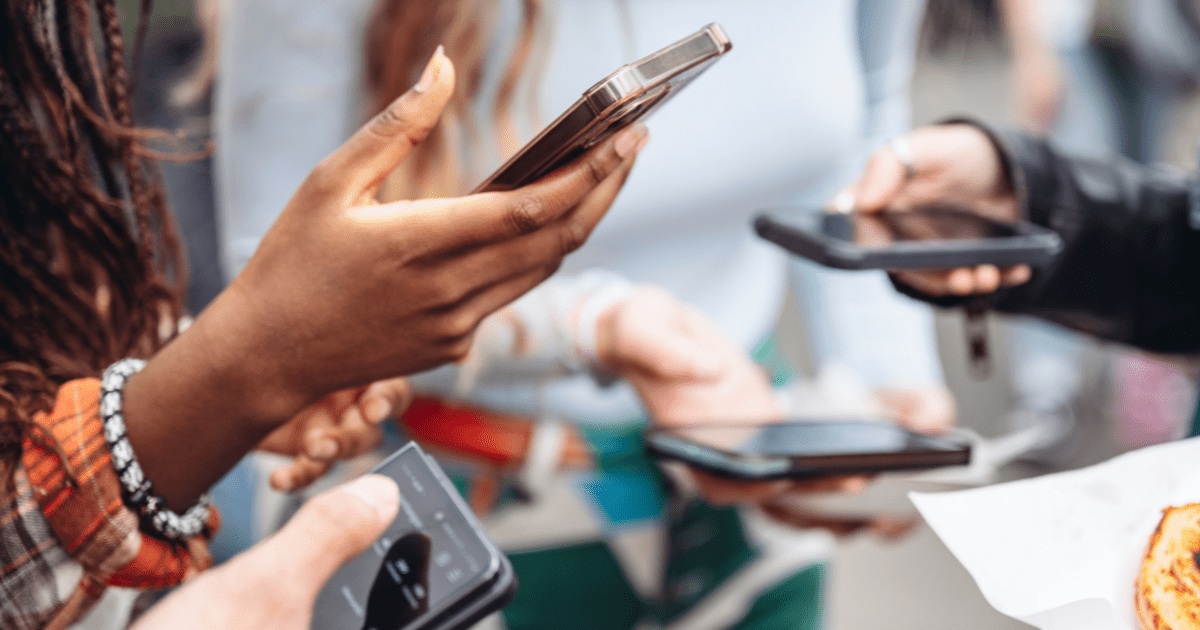
Social media is woven into everyday life. With billions of users on Instagram and Facebook alone, teens and young adults are immersed in online spaces where they share experiences, explore identity, and observe the lives of others. Yet these same platforms can also become environments where constant social comparison shapes how young people see themselves and how they feel.
Research continues to show that social comparison on social media can influence mood, self-esteem, and overall mental health, particularly among adolescents and young adults (Lee, 2014). For some, these online spaces provide support and a sense of belonging (Hjetland et al., 2021). For others, they trigger feelings of inadequacy, envy, anxiety, or depression (Shensa et al., 2021). Understanding how social comparison works, and how Cognitive Behavioural Therapy (CBT) can help, offers a practical pathway for supporting youth and families who feel overwhelmed by the emotional impact of social media.
What Is Social Comparison, and Why Does It Matter?
Social comparison (SC) is not a new idea. Psychologist Leon Festinger first described it in 1954, explaining that people naturally evaluate themselves by comparing their abilities and experiences to others (Flett et al., 2024). This becomes especially powerful when the comparison relates to something important to the individual, such as their appearance, friendships, lifestyle, achievements, or identity.
What is new, however, is the scale and intensity at which these comparisons now happen. In the past, comparison was limited to one’s immediate social circles. Today, young people are exposed to thousands of images, updates, and highlight reels from friends, influencers, and strangers, all within minutes.
Research consistently shows that passive social media use increases the likelihood of “upward comparison,” comparing oneself to someone perceived as doing better, looking better, or achieving more (de Vries et al., 2018). Upward comparison is strongly associated with lower mood, higher self-consciousness, and a drop in self-esteem (Lee, 2014).
However, and this is important, not everyone responds to social comparison the same way. Individual differences such as personality traits, social orientation, self-esteem, and mental health history determine the degree to which social media affects someone emotionally (de Vries et al., 2018).
What Teens and Young Adults Are Saying
Across studies, young people report both positive and negative effects of social media use. Positive effects include connection, support, and creativity (Keles et al., 2024). Negative effects include envy, anxiety, insecurity, and worsening mood tied to upward comparison (Radovic et al., 2017).
Some youth attempt self-management strategies like taking breaks or filtering their feeds, but many still struggle with the emotional impact of constant exposure (Samari et al., 2022). Teens often feel they can manage on their own, while clinicians highlight the importance of limits and support (O’Reilly, 2020).
How Cognitive Behavioural Therapy Can Help
CBT is not designed specifically for social comparison, but evidence shows it effectively addresses the emotional and behavioural patterns seen in problematic smartphone use and comparison-based distress.
CBT can:
- Improve emotional regulation (Lu et al., 2020)
- Challenge distorted self-comparisons and negative thinking
patterns (Lu et al., 2020)
- Reduce problematic smartphone behaviours (Throuvala et al., 2020)
- Decrease depressive symptoms linked to online habits (Brailovskaia et al., 2020)
Parents and clinicians can use CBT-informed strategies to help youth identify comparison triggers, challenge unhelpful thoughts, and build more balanced online habits.
Implications for Parents and Practitioners
Because social comparison affects individuals differently, the focus should be on understanding the young person’s unique response to social media. Helpful areas to explore include:
• Why they use social media
• How they interpret others’ posts
• Whether comparison impacts mood or self-esteem
• Whether depressive symptoms follow certain online patterns
Social media literacy programs and CBT-informed tools may reduce vulnerability to comparison-driven distress (Keles et al., 2024).
Final Thoughts
Social media is both a connection tool and a source of emotional strain. CBT provides evidence-based strategies to help youth interpret online content more realistically, regulate emotions, and build healthier online habits. With the right support, teens and young adults can navigate social media in ways that protect their mental well-being while also fostering self-awareness, emotional resilience, and healthier patterns of engagement.
References
Brailovskaia, J., Strose, F., Schillack, H., & Margraf, J. (2020). Less Facebook use – More well-being and a healthier lifestyle? An experimental intervention study. Computers in Human Behavior, 108, 106332. https://doi.org/10.1016/j.chb.2020.106332
de Vries, D. A., Möller, A. M., Wieringa, M. S., Eigenraam, A. W., & Hamelink, K. (2018). Social comparison as the thief of joy: Emotional consequences of viewing strangers’ Instagram posts. Media Psychology, 21(2), 222-245. https://doi.org/10.1080/15213269.2016.1267647
Flett, G. L., Nepon, T., Hewitt, P. L., Su, C., Yacyshyn, C., Moore, K., & Lahijanian, A. (2024). The Social Comparison Rumination Scale: Development, psychometric properties, and associations with perfectionism, narcissism, burnout, and distress. Journal of Psychoeducational Assessment. https://doi.org/10.1177/07342829241238300
Hjetland, G. J., Schønning, V., Hella, R. T., Veseth, M., & Skogen, J. C. (2021). How do Norwegian adolescents experience the role of social media in relation to mental health and well-being: a qualitative study. BMC psychology, 9(1), 78. https://doi.org/10.1186/s40359-021-00582-x
Keles, B., Grealish, A., & Leamy, M. (2024). The beauty and the beast of social media: an interpretative phenomenological analysis of the impact of adolescents’ social media experiences on their mental health during the Covid-19 pandemic. Current Psychology, 43, 96-112.
Lee, S. Y. (2014). How do people compare themselves with others on social network sites?: The case of Facebook. Computers in Human Behavior, 32, 253-260. https://doi.org/10.1016/j.chb.2013.12.009
Lu, C., Zou, L., Becker, B., Griffiths, M. D., Yu, Q., Chen, S., Demetrovics, Z., Jiao, C., Chi, X., Chen, A., Yeung, A., Liu, S., & Zhang, Y. (2020). Comparative effectiveness of Mind-Body Exercise versus Cognitive Behavioral Therapy for college students with problematic smartphone use: A Randomized Controlled Trial. International Journal of Mental Health Promotion, 22(4), 271-282. http://doi:10.32604/IJMHP.2020.014419
O’Reilly M. (2020). Social media and adolescent mental health: the good, the bad and the ugly. Journal of mental health (Abingdon, England), 29(2), 200–206. https://doi.org/10.1080/09638237.2020.1714007
Samari, E., Chang, S., Seow, E., Chua, Y. C., Subramaniam, M., van Dam, R. M., Luo, N., Verma, S., & Vaingankar, J. A. (2022). A qualitative study on negative experiences of social media use and harm reduction strategies among youths in a multi-ethnic Asian society. PloS one, 17(11), e0277928. https://doi.org/10.1371/journal.pone.0277928
Shensa, A., Sidani, J. E., Hoffman, B. L., Escobar-Viera, C. G., Melcher, E. M., Primack, B. A., Myers, S. P., & Burke, J. G. (2021). Positive and negative social media experiences among young adults with and without depressive symptoms. Journal of Technology in Behavioral Science, 6, 378-387. https://doi.org/10.1007/s41347-020-00175-2
Throuvala, M. A., Griffiths, M. D., Rennoldson, M., & Kuss, D. J. (2020). Mind over Matter: Testing the Efficacy of an Online Randomized Controlled Trial to Reduce Distraction from Smartphone Use. International journal of environmental research and public health, 17(13), 4842. https://doi.org/10.3390/ijerph17134842